22 December, 2025

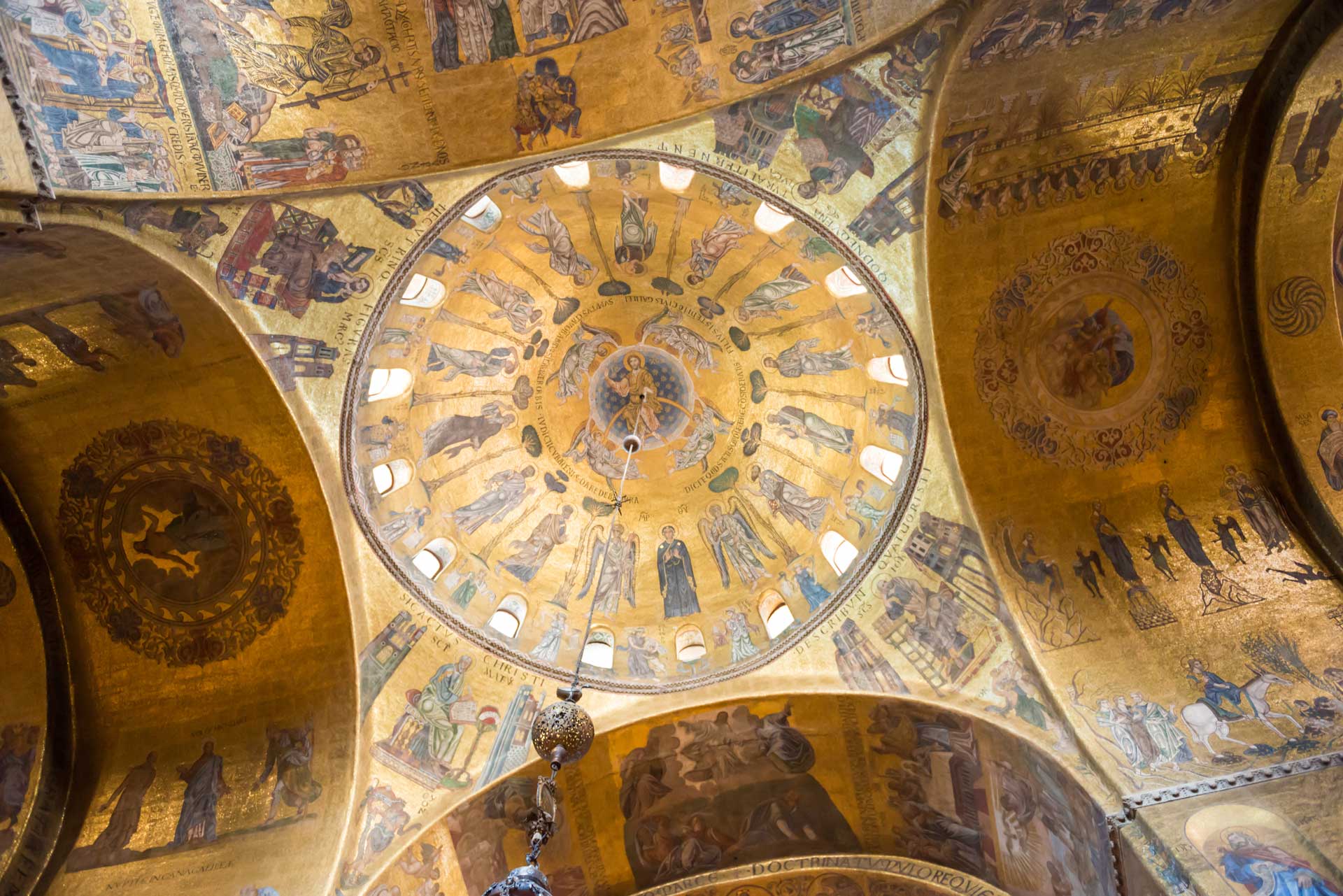
In the heart of Charleroi, Belgium, overlooking Charles II Square, the Church of Saint‑Christophe preserves a centuries‑old history shaped by transformations, memories, and rebirths. Among its layered architectures, a central role is now played by the great mosaic in the choir, created with smalti and gold‑leaf tesserae produced by the historic Orsoni furnace.
The origins of the church date back to 1667, when the French, having just conquered the city, built a garrison chapel dedicated to Saint Louis at the request of Louis XIV.
In 1722 the building was expanded and consecrated to Saint Christopher, taking on Baroque forms that still survive today in the 1723 choir and in part of the nave, built between 1778 and 1781 by the architect Flavion.
After the bombings of 1794, the church was rebuilt and later restored again in 1863, particularly the façade, under the direction of architect Auguste Cador.


The Second World War marks a new chapter in the building’s history. To commemorate the victims of the massacre of twenty hostages in 1944, the church was enlarged and transformed by architects Joseph André, Robert Puttemans, and Charles Malcause.
In 1956, a new monumental space was created, dominated by a dome sixteen meters in diameter and forty‑eight meters high, while the main entrance was moved to rue Vauban.
The pre‑existing Baroque church became the transept of the new structure. It is within this context that the masterpiece defining the sanctuary’s visual identity took shape
In the new choir, architect Joseph André commissioned a monumental mosaic based on drawings by artist Jean Ransy: a representation of the Apocalypse of Saint John spanning more than 200 m².
The work was executed by Venetian master mosaicists from the Orsoni furnace. The mosaic is composed of thousands of Venetian smalti and gold‑leaf tesserae, all handcrafted in the historic Orsoni furnace. It is a unique work within the Belgian artistic landscape.


Related projects